

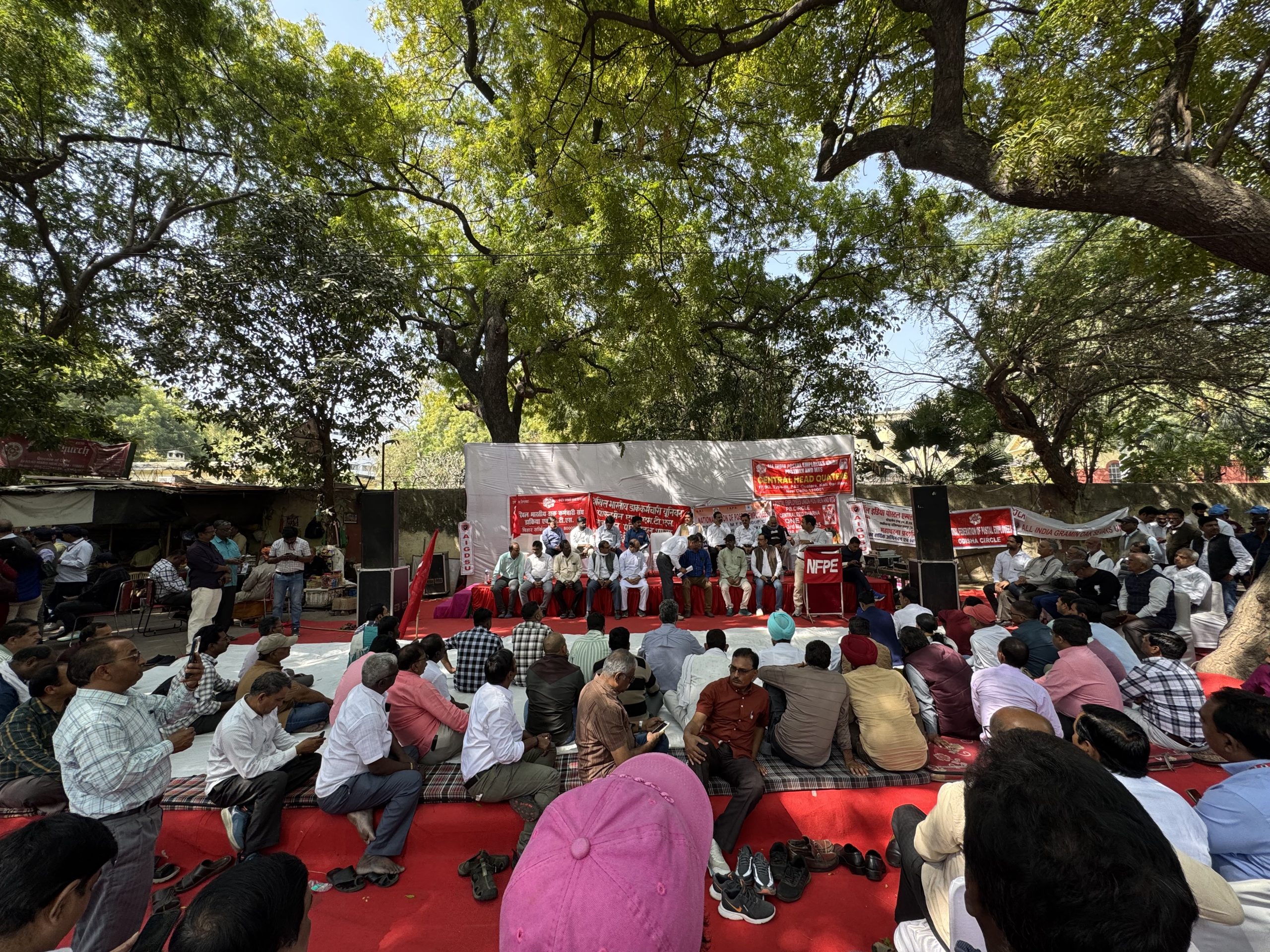
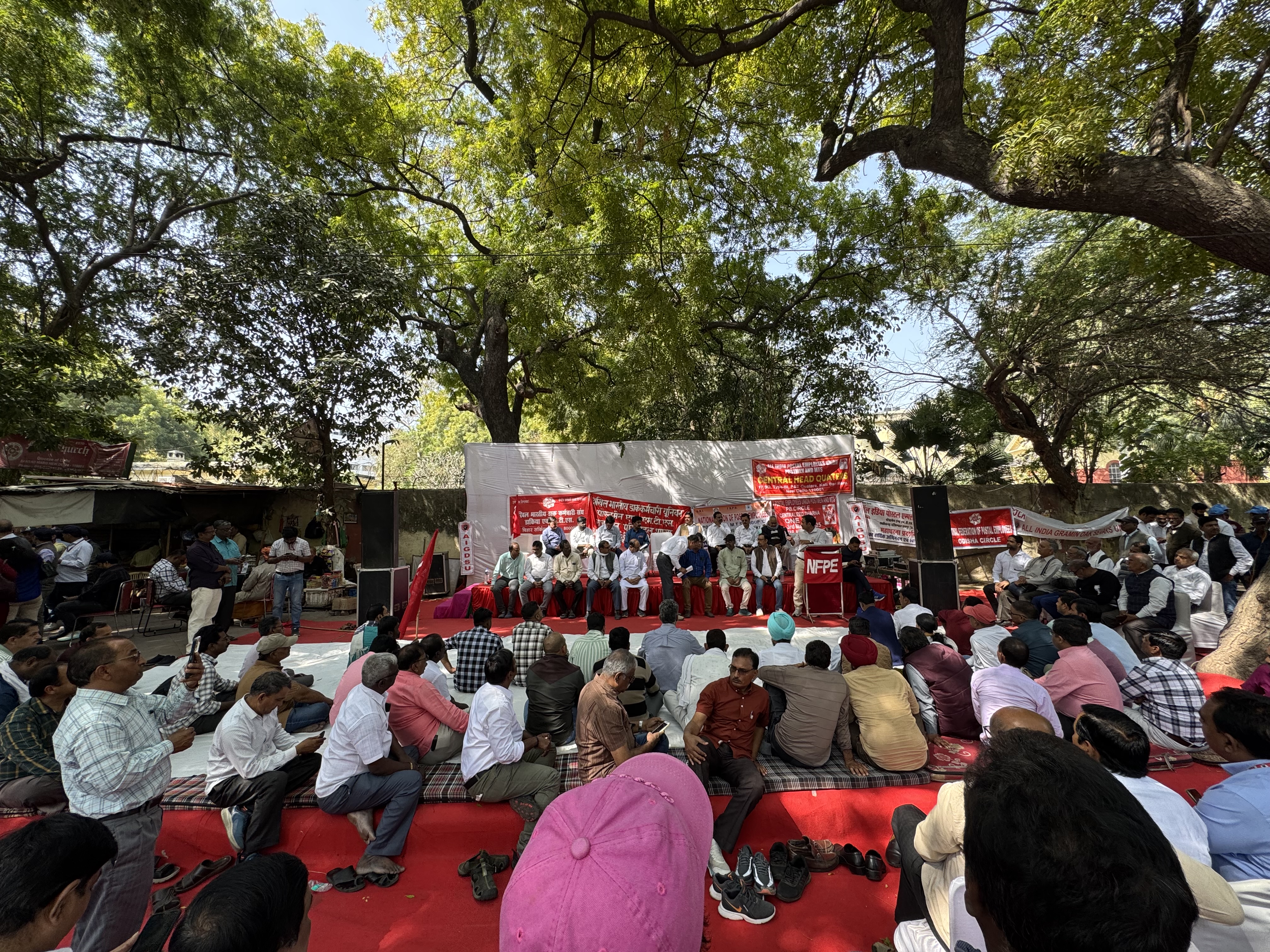
On March 3, 2025, New Delhi’s “Jantar Mantar” was charged with energy as thousands of workers gathered in protest. The United Forum of Bank Unions (UFBU) held a massive dharna, pressing for a five-day workweek and sufficient staff recruitment. At the same time, another determined group—the Postal Joint Council of Action (PJCA)—raised a powerful slogan: “Save the Postal Department.”
As a participant in the dharna, I was drawn to the passionate struggle of postal employees. What was at stake? Why were they fighting so fervently? My conversations with Com. Janardhan Majumdar, General Secretary of the National Federation of Postal Employees (NFPE), revealed the depth of the crisis. This is a battle for the very survival of India’s 150-year-old postal system, which has been a lifeline for millions—especially in rural India.
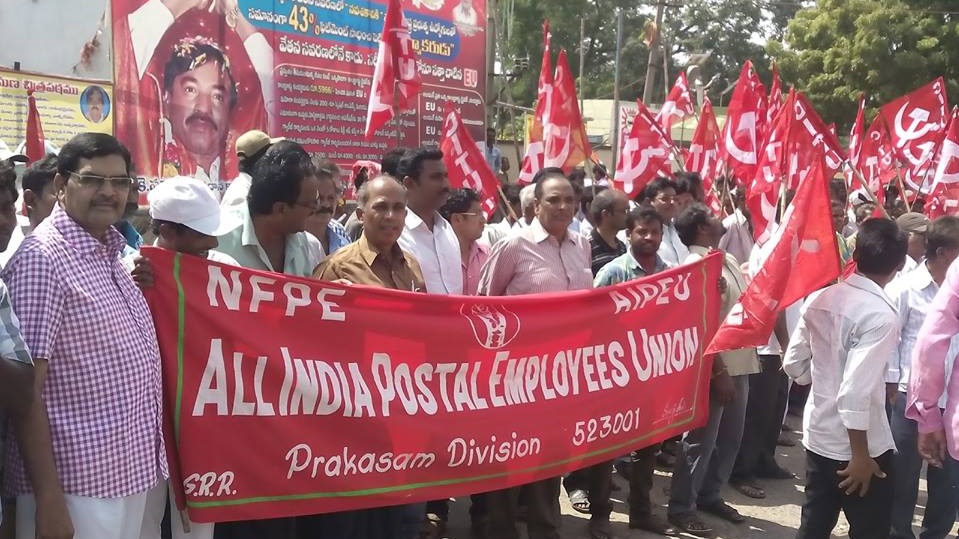
The Privatisation Push: A Silent Takeover?
The seeds of the current crisis were sown in 2014, when the Modi government began efforts to corporatize the Postal Department. This move triggered nationwide resistance, culminating in a massive strike on August 10, 2022, where 500,000 postal workers protested against privatization.
However, the government doubled down. In April 2023, it derecognized key unions such as the NFPE and AIPEU Group C, an act seen as silencing dissent. Then came the Post Office Act, 2023, a law that replaced a 125-year-old statute but raised alarming concerns.
The Post Office Act, 2023: A Blueprint for Privatisation
The introduction of the Post Office Act, 2023, replacing the 125-year-old Indian Post Office Act of 1898, has raised significant concerns among postal employees and the general public. While the government asserts that the Act aims to modernize and expand postal services, critics argue that it retains draconian provisions from the colonial era and opens doors for increased centralization and potential misuse of power. Notably, the Act allows the government to intercept and detain postal articles for reasons of national security, public order, or preventing illegal activities, raising concerns about potential misuse and violation of individual privacy.
The Assault on RMS and MMS: Crippling the Core of Postal Services
India’s Railway Mail Service (RMS) and Mail Motor Service (MMS)—established in 1854—have been celebrated for their efficiency. Yet, under the guise of “rationalization,” successive governments have dismantled these essential services.
• Sorting Offices replaced RMS Sections, disrupting thousands of employees.
• In 2023, a fresh attack came with a move to merge Sorting Assistants with Postal Assistants, causing chaos in operations.
• The December 9, 2024 directive abolished L-2 RMS offices, forcing mail rerouting, delivery delays, and the relocation of employees far from their families.
These changes are not about efficiency—they are about weakening the public sector to justify privatization.
Independent Delivery Centers (IDCs): A Backdoor to Outsourcing?
The latest policy shift introduces Independent Delivery Centers (IDCs), which consolidate multiple delivery offices into single hubs covering vast areas. While this may sound like modernisation, it could spell doom for small, rural post offices—the backbone of India’s postal network. The real fear? IDCs could pave the way for privatisation of delivery services, pushing permanent postal employees out while allowing private players to step in.
Financial Services: The Hidden Hand of Corporates
In another alarming move, India Post Payments Bank (IPPB) Ltd. is being given control over Automated Teller Machines (ATMs) that were traditionally managed by the Post Office Savings Bank (POSB). This shift has sparked fears that other financial services—including small savings schemes—will also be handed over to corporate entities. If this happens, millions of rural depositors could lose access to their trusted savings system.
Why This Fight Matters to You
India’s Postal Department isn’t just another government agency—it is an essential public service that connects the nation. It provides affordable mail services, reliable financial savings, and even banking access to millions who rely on it.
If corporatization continues unchecked, postal services will become expensive, inaccessible, and driven by profit motives. The very people who need it most—the poor, the elderly, and those in remote areas—will be left behind.
The fight at “Jantar Mantar” is not just for postal workers or bankers; it is for every Indian citizen who values a public postal system that serves people, not profits. The time to act is now.